

In today’s business landscape, leaders are rethinking how they build strong cultures, retain top talent, and protect the legacy they’ve spent decades creating. For many, an employee stock ownership plan (ESOP) has become a compelling path — not just for ownership transition planning, but for transforming how employees show up and collectively invest in the future of the company.
But what does employee ownership actually feel like for the people inside an ESOP? What changes when employees become shareholders? And why does this matter for business owners evaluating ESOP succession planning or broader business succession planning?
At SSC CPAs + Advisors, a 100% employeeowned firm, the answers are clear and compelling.
Most employees in traditional companies show up, do their jobs, and go home. Rinse. Repeat.
They may be committed, but they don’t have a personal stake in the organization’s long‑term success.
An ESOP changes that dynamic entirely.
When employees become owners, their mindset shifts from “doing my job” to “building our company.” They think differently about decisions, collaboration, and the future, because they’re actually invested in it.
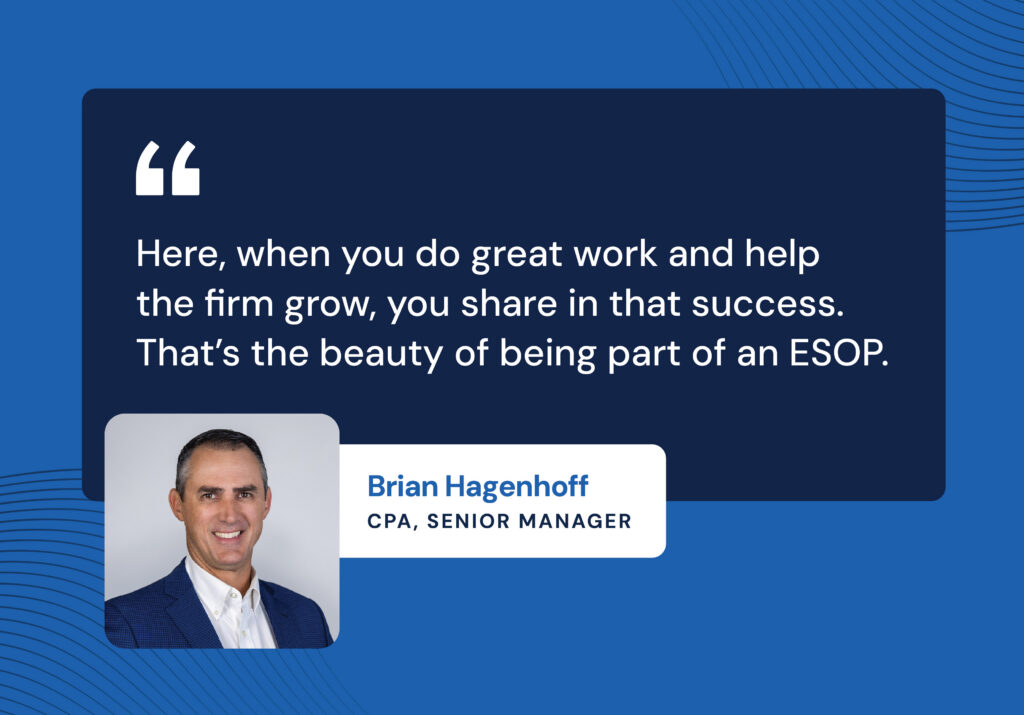
As Senior Manager Brian Hagenhoff, CPA, puts it:
“Here, when you do great work and help the firm grow, you share in that success. That’s the beauty of being part of an ESOP.”
That sense of shared reward is one of the most defining experiences inside an ESOP, and it’s one of the strongest reasons business owners explore employee ownership as part of their ownership transition planning.
Employee ownership creates a culture where people feel responsible for the success of the business. They’re not just protecting a job; they’re protecting their future.
At SSC, this shows up in three ways:
Owners don’t wait for someone else to solve a problem. They step in and actively look for ways to improve processes, client service, and team performance.
Silos shrink. Teams work toward shared goals because everyone benefits when the company succeeds.
When employees feel valued, invested, and connected to the mission, they stick around. That stability is a major advantage for clients who rely on long‑term relationships and consistent advisory support.
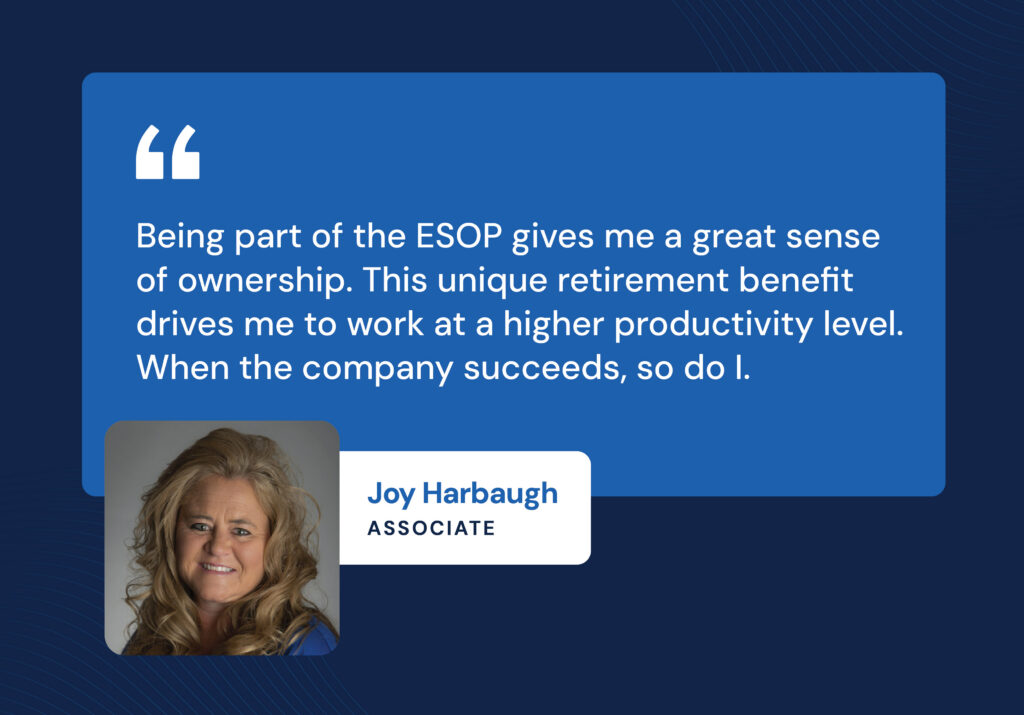
Associate Joy Harbaugh describes it well:
“Being part of the ESOP gives me a great sense of ownership. This unique retirement benefit drives me to work at a higher productivity level. When the company succeeds, so do I.”
For business owners evaluating ESOP succession planning, this cultural shift is often one of the biggest selling points.
Inside an ESOP, employees build wealth over time — not through personal investment, but through the company’s growth.
This is one of the most surprising and meaningful experiences for employees:
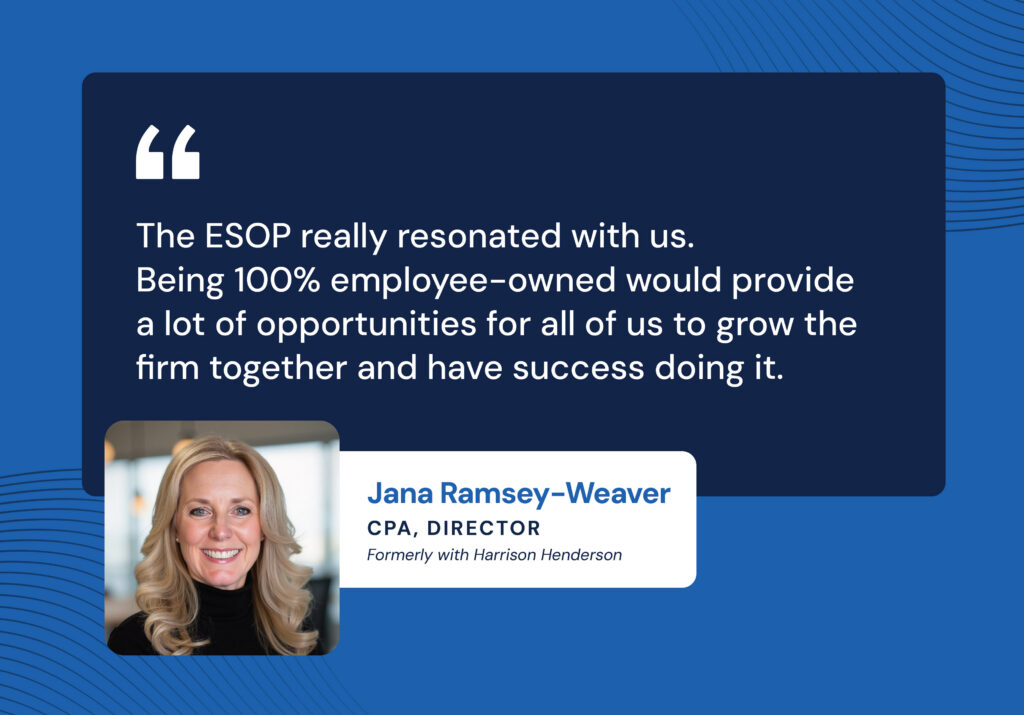
Director Jana Ramsey‑Weaver, CPA, explains why this mattered during her team’s merger with SSC:
“The ESOP really resonated with us. Being 100% employee‑owned would provide a lot of opportunities for all of us to grow the firm together and have success doing it.”
For leaders considering business succession planning, this financial upside is a powerful way to reward employees and reinforce a legacy built on shared prosperity.
When employees experience ownership, clients experience greater consistency. That’s one of the most overlooked benefits of an employee stock ownership plan, and one of the most valuable for business owners evaluating their next chapter.
Inside an ESOP, clients benefit from:
For leaders exploring ownership transition planning, this stability is often the deciding factor. ESOPs protect the culture and the identity of the business, all while empowering employees to carry the legacy forward.
Many firms talk about ESOPs. SSC lives and breathes it.
As a 100% employee‑owned company, we understand the operational, cultural, and financial realities of employee ownership. How? Because we’ve navigated them ourselves.
That firsthand experience strengthens our ability to guide business owners through:
If you’re considering an ESOP or exploring your succession options, SSC is ready to help you evaluate the path that protects your legacy and empowers your people. We’re ready when you are. Contact us to arrange a free consultation.

“SSC CPAs + Advisors” and “SSC” are the brand names under which SSC Advisors, Inc. and SSC CPAs, PA provide professional services. SSC Advisors, Inc. and SSC CPAs, PA practice as an alternative practice structure in accordance with the AICPA Code of Professional Conduct and applicable law, regulations, and professional standards. SSC CPAs, PA is a licensed independent CPA firm that provides attest services to its clients, and SSC Advisors, Inc. entities provide tax, advisory, and business consulting services to their clients. SSC Advisors, Inc. is not a licensed CPA firm. Our use of the terms “our firm” and “we” and “us” and terms of similar import, denote the alternative practice structure conducted by SSC Advisors, Inc. and SSC CPAs, PA. Advisory services provided through Merit Financial Group, LLC. Merit Financial Group, LLC is a registered investment advisor with the U.S. Securities and Exchange Commission.