

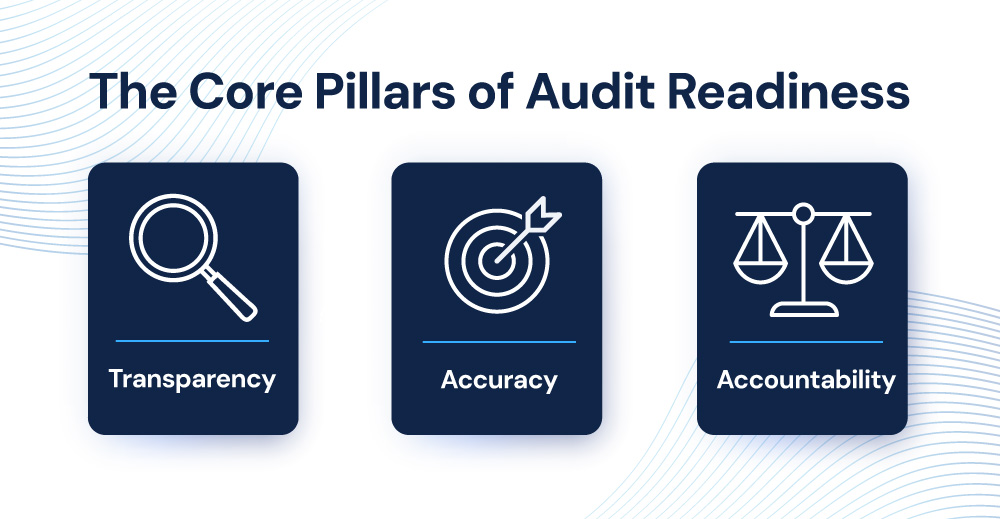
In the nonprofit sector, audit readiness has evolved from a basic compliance obligation into a strategic necessity that is foundational to strong governance and essential for maintaining stakeholder trust. Audit readiness enables organizations to provide clear, accurate, and timely financial information, which is vital for demonstrating transparency and accountability.
Transparency ensures that stakeholders can see how resources are being managed and allocated, fostering confidence that contributions are used as intended. Accuracy guarantees that the information shared is reliable, supporting informed decision-making and compliance with reporting requirements. Together, these qualities build accountability by demonstrating responsible stewardship and ethical management, and reassuring stakeholders that the organization is dedicated to its mission.
For nonprofit leaders, audit readiness is about more than passing an annual audit. It means embedding best practices into daily operations and enabling organizations to respond quickly to stakeholder inquiries, adapt to new opportunities, and sustain their impact.
This article explores the strategic benefits of audit readiness for nonprofits and illustrates how a proactive approach can drive organizational excellence and long-term success.
Audit readiness starts with maintaining accurate financial records and a strong internal control environment. This foundation supports:
Example
During a major fundraising campaign, a nonprofit with audit-ready systems provided real-time financial updates to donors, increasing trust, and resulting in higher contributions.
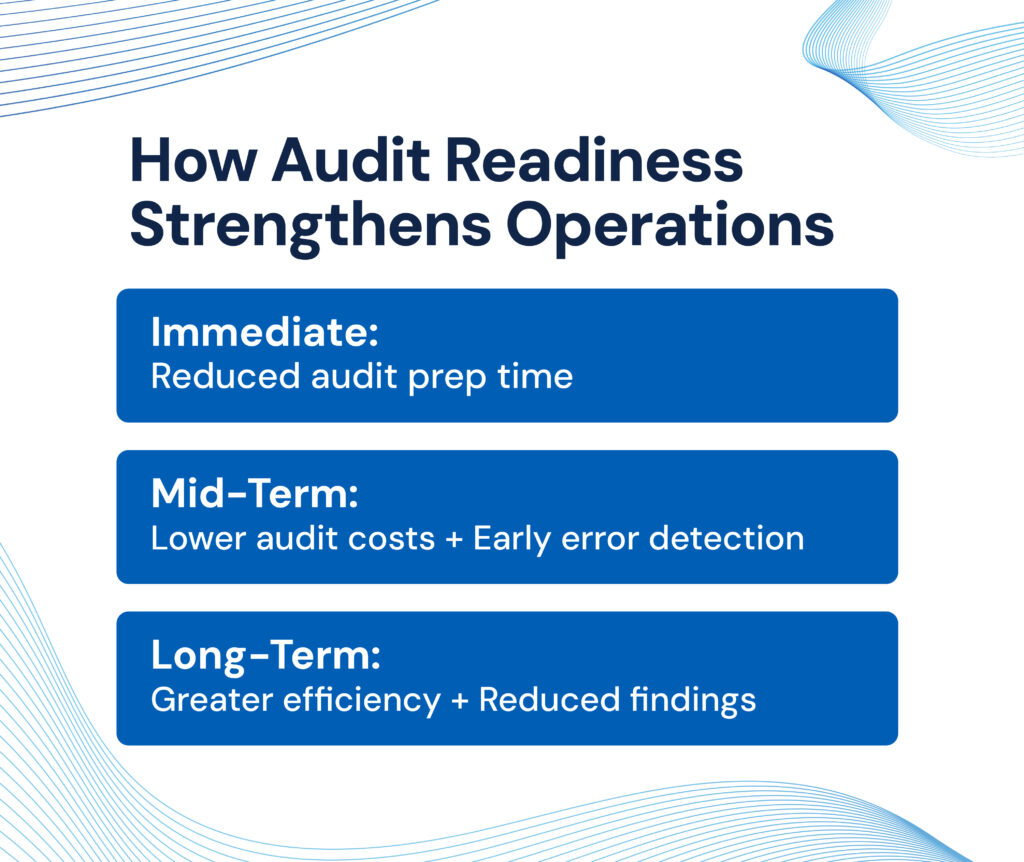
Audit readiness also drives operational efficiency. Nonprofits that incorporate audit preparation into daily routines benefit from:
Example
A regional nonprofit implemented a monthly “mini audit” checklist. Over two years, they reduced audit findings by 60% and cut external audit fees by 10% due to increased preparedness.
Audit readiness is crucial for managing financial, compliance, and reputational risks—especially for nonprofits that receive government or foundation grants.
Example
After several years of audit findings, a human services nonprofit implemented a centralized grant management system. The result: all prior audit findings were resolved, and the organization regained eligibility for key grant opportunities.
Audit readiness is not just about systems—it is about people and processes. Part of embracing a readiness culture includes investing in:
Example
After repeated findings on documentation, a nonprofit finance team created a peer review process and standardized templates. The next year, there were no audit findings related to documentation.
Technology is a key enabler of audit readiness. Strategic investments in systems and tools provide real-time oversight and scalable solutions:
Example
A nonprofit used an analytics dashboard to spot a 15% increase in grant reporting cycle times, prompting a process review that resolved the issue before it became an audit concern.
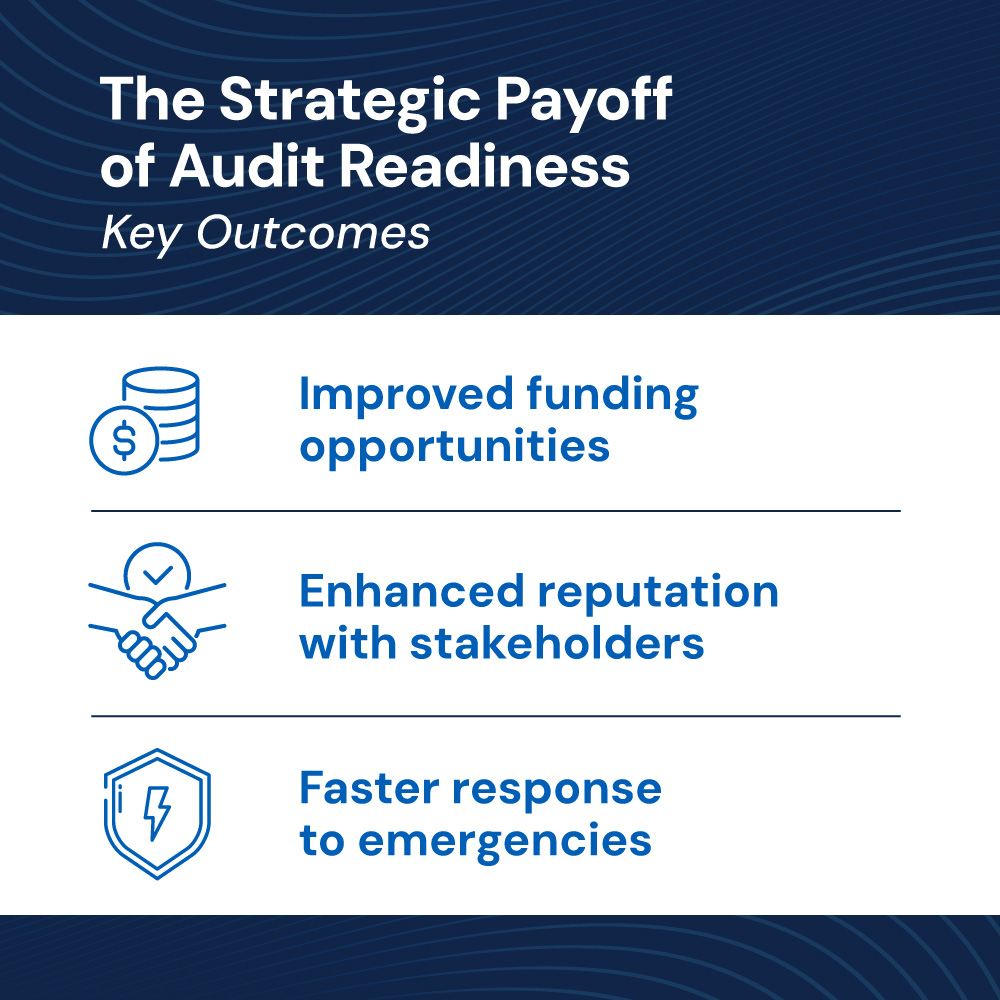
Beyond immediate improvements in financial reporting and compliance, audit readiness positions nonprofits for long-term success:
For nonprofits, audit readiness is a year-round discipline that aligns operational execution with mission-driven goals. Leaders who embed readiness into their finance functions gain efficiency, accuracy, and resilience in the face of uncertainty.
Whether it is responding to a donor’s inquiry about the use of their contribution, submitting financial reports to a grantor, or addressing regulatory compliance questions, an audit-ready organization can deliver the necessary documentation and data quickly and confidently. This responsiveness not only strengthens relationships with existing supporters but also enhances the organization’s reputation and credibility with potential funders and oversight bodies.
With the support of modern technology, ongoing staff development, and a commitment to compliance, nonprofits can enhance their credibility, protect their funding, and better serve their communities. Ultimately, audit readiness empowers nonprofits to demonstrate transparency, accountability, and stewardship—qualities that are essential for building trust and sustaining long-term impact.
Written by Lee Klumpp. Copyright © 2025 BDO USA, P.C. All rights reserved. www.bdo.com

“SSC CPAs + Advisors” and “SSC” are the brand names under which SSC Advisors, Inc. and SSC CPAs, PA provide professional services. SSC Advisors, Inc. and SSC CPAs, PA practice as an alternative practice structure in accordance with the AICPA Code of Professional Conduct and applicable law, regulations, and professional standards. SSC CPAs, PA is a licensed independent CPA firm that provides attest services to its clients, and SSC Advisors, Inc. entities provide tax, advisory, and business consulting services to their clients. SSC Advisors, Inc. is not a licensed CPA firm. Our use of the terms “our firm” and “we” and “us” and terms of similar import, denote the alternative practice structure conducted by SSC Advisors, Inc. and SSC CPAs, PA. Advisory services provided through Merit Financial Group, LLC. Merit Financial Group, LLC is a registered investment advisor with the U.S. Securities and Exchange Commission.