

At SSC CPAs + Advisors, we work with business owners and leaders who come to us seeking strategic guidance for planning across many areas: rebooting culture, strengthening recruitment and retention, improving communication, preparing for crisis response or aligning leadership during an offsite. But one of the most common needs we see centers on strategic planning itself: helping leaders, managers and employees align and bring the strategy to life.
The challenge is that even with a process in place, many organizations look back a year later and wonder, “What happened?” According to research published in the Harvard Business Review, 85% of executive leadership teams spend less than one hour per month discussing strategy, and 50% spend no time at all.
So, what does effective strategic planning really look like?
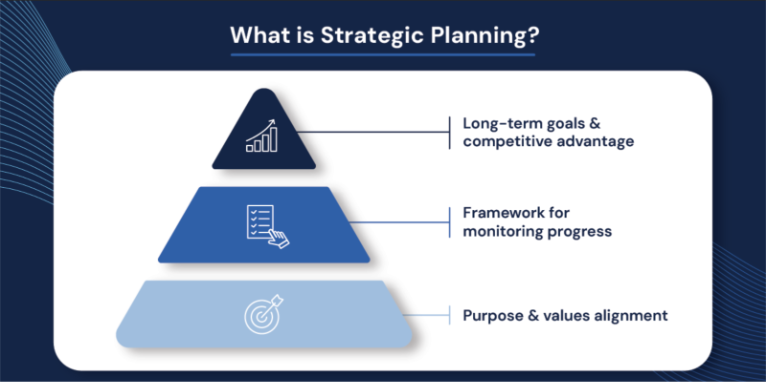
It turns out that many people aren’t entirely clear what a strategic plan is, or how to make it impactful. Too often, leaders confuse it with organizational goals, objectives or motivational taglines, and end up creating an operational plan (“when” and “where”) or business plan (“who” and “what”) instead of a strategic one.
A true strategic plan defines long-term goals and explains how your organization will gain a competitive advantage. It provides a long-term view, a basis for monitoring progress and a framework for assessing results and impact. It should facilitate new program development and allow you to look ahead in an orderly, systematic way. Most importantly, it grounds your organization in its purpose and values.
With today’s global volatility and inflationary pressures, your strategic plan should be front and center to help you anticipate and mitigate potential impacts. Below are six best practices we recommend as you build or refresh your plan.
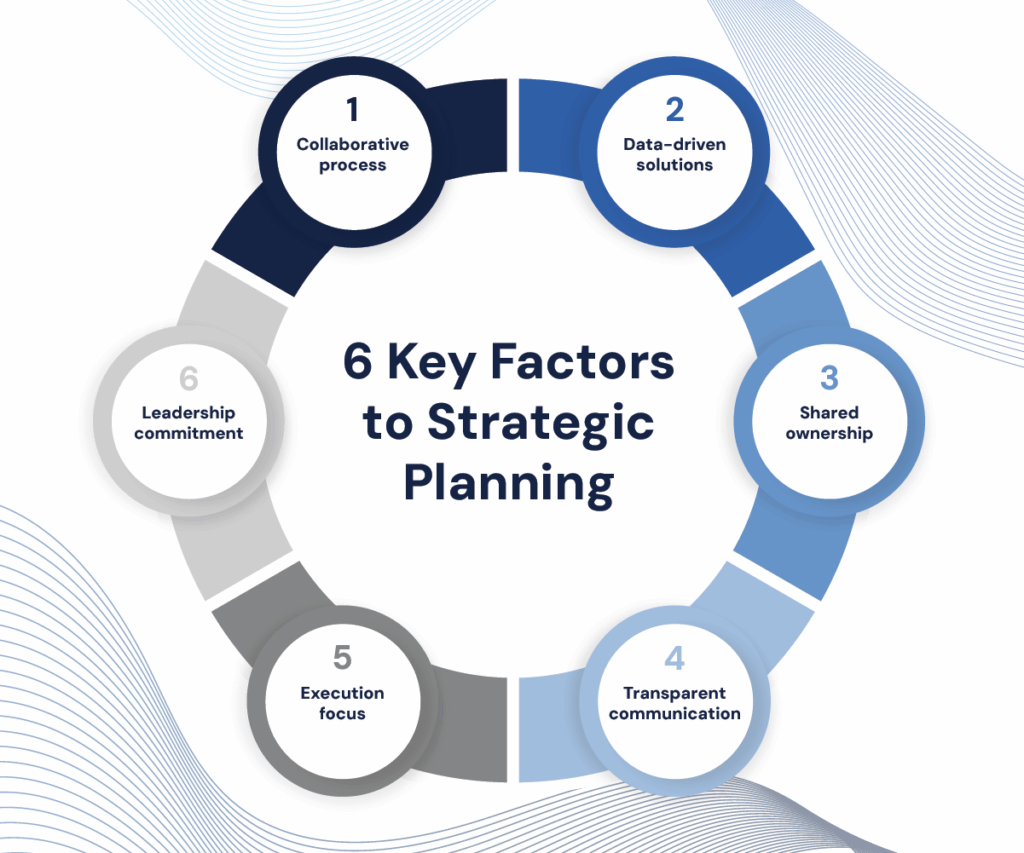
While this may seem obvious, it’s often the hardest step. Over-consensus can slow progress, but collaboration is critical for success. A plan built in a silo will fail to gain traction.
The right process brings a mix of people together: leadership, finance, HR, operations, sales, marketing and other stakeholders. Ask yourself: “Who will this decision impact?” Bringing those voices to the table ensures your plan reflects the full vision of the organization.
Structure also matters. Schedule check-ins and working sessions thoughtfully, ensuring the right people are involved at the right times. And set a realistic timeline: building a new plan can take months, while refreshing an existing one might take 4–6 weeks. Because strategic planning is about long-term direction, dedicate time for reflection on who you are, where you want to go and how you’ll get there.
Assumptions and gut feelings can derail a strategy. Data is what keeps you honest and effective.
Collect both internal and external data:
Then add context by gathering feedback, through surveys, focus groups or conversations with staff and stakeholders. Numbers only tell part of the story; the “why” behind them is what drives better decisions.
Too often, organizations create a planning committee without defining roles. Clear expectations for participation are critical. The right contributors should be energized, collaborative and ready to champion the plan across the organization.
When ownership is shared and roles are well-defined, people are more invested in outcomes and more likely to help move the plan forward.
Trust is essential for buy-in, and trust requires communication. From the start of plan development through execution, share updates on inputs, decisions and next steps.
Transparency helps stakeholders feel heard and engaged, while also simplifying the rollout. Translate long, complex documents into concise, shareable formats that make it easy for everyone to understand their role in execution. Pairing your plan with a communications strategy ensures alignment and momentum.
A strategic plan is only as effective as its execution. Define capacity, resources and priorities that support your organizational goals. Establish KPIs that are simple, measurable and realistic, and don’t shift them when results fall short. Missed goals often reveal where the strategy needs refining.
Remember the human element: less than 5% of employees fully understand their company’s strategy. Training, communication and involvement are key. Change management is just as important as the plan itself.
Change is uncomfortable, especially for organizations with a history of doing things the same way. But demographic shifts, technological advances and market dynamics demand adaptation.
For your strategic plan to succeed, leaders must be willing to challenge outdated processes, policies and even cultural norms, and then lead the way through change. Strategy is iterative and should evolve alongside your business and industry.
A strong strategic plan is essential for organizations to stay resilient and competitive in today’s complex, ever-changing environment. Whether you’re developing a plan for the first time or refreshing an existing one, now is the time to pause, reflect and chart a clear course for the future.
At SSC, we see far too many clients who don’t proactively plan and then, come tax season or year-end, find themselves scrambling. The key is having a partner who understands your goals, where you’ve been and where you want to go.
We don’t just pull the data. We help you analyze it, prepare for what’s next and build the confidence to execute.
Contact us today to get started.

“SSC CPAs + Advisors” and “SSC” are the brand names under which SSC Advisors, Inc. and SSC CPAs, PA provide professional services. SSC Advisors, Inc. and SSC CPAs, PA practice as an alternative practice structure in accordance with the AICPA Code of Professional Conduct and applicable law, regulations, and professional standards. SSC CPAs, PA is a licensed independent CPA firm that provides attest services to its clients, and SSC Advisors, Inc. entities provide tax, advisory, and business consulting services to their clients. SSC Advisors, Inc. is not a licensed CPA firm. Our use of the terms “our firm” and “we” and “us” and terms of similar import, denote the alternative practice structure conducted by SSC Advisors, Inc. and SSC CPAs, PA. Advisory services provided through Merit Financial Group, LLC. Merit Financial Group, LLC is a registered investment advisor with the U.S. Securities and Exchange Commission.