

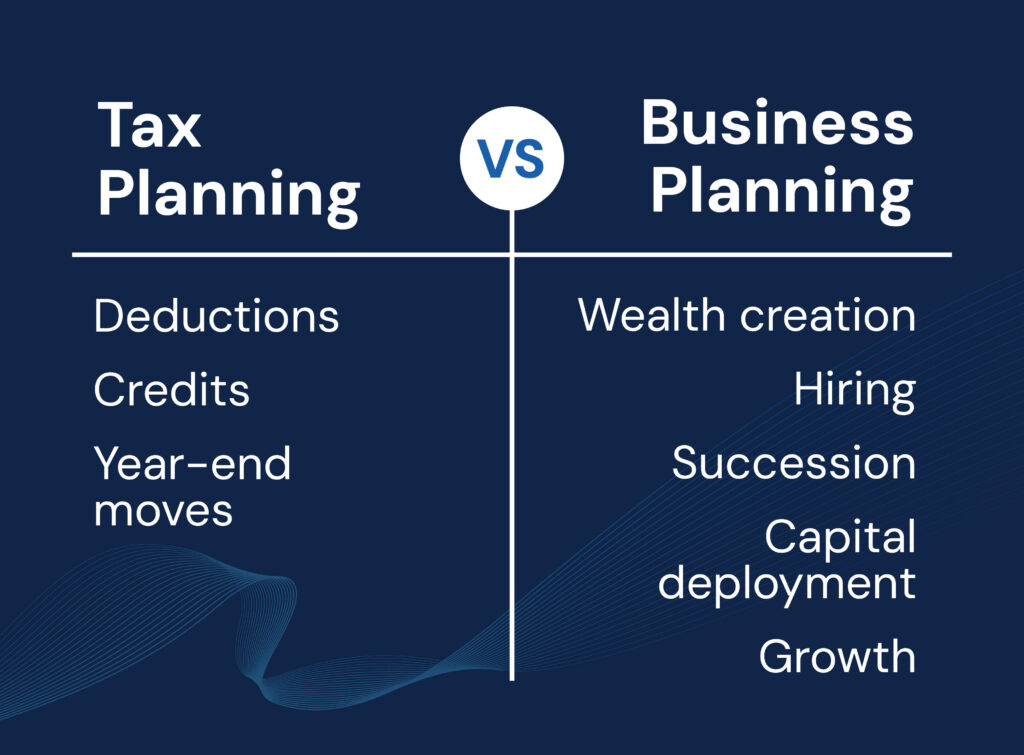
As the calendar year winds down, many business owners must turn their attention to tax planning. Make no mistake, reducing taxes is certainly important. However, focusing exclusively on deductions and credits can cause you to miss much bigger opportunities.
Lowering this year’s tax bill is an essential part of end-of-year planning, but it’s also important to understand what happened in your business, preparing for what’s next, and making decisions that strengthen your long-term financial position.
As Chris Kohart, CPA, CEPA, and Senior Manager, SSC CPAs + Advisors explains, “The ultimate goal is to build wealth. It’s not necessarily to save taxes.”
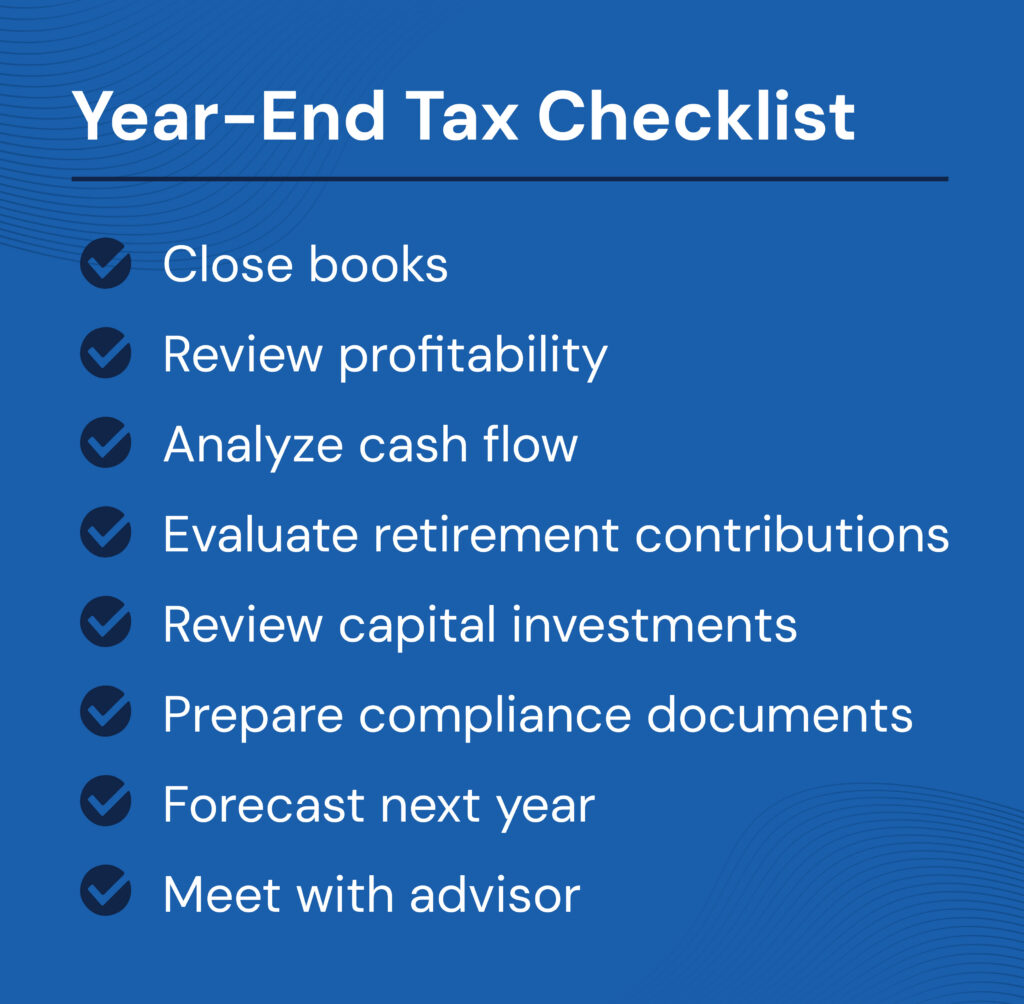
If you lead a family-owned company, growing startup, or established organization, this year-end checklist can help you use the final weeks of the year to make smarter financial and operational decisions.
You can’t make informed decisions without accurate financial information.
Too often, business owners wait until year-end to reconcile accounts, categorize expenses, or close previous months. Imagine trying to plan for what’s next while simultaneously trying to understand what happened six months ago.
As Chris puts it: “It’s hard to make reasonably informed decisions on outdated books.”
Current financials provide the foundation for every aspect of strategic tax planning, so prioritize getting your books up to date if you haven’t already.
How did the year really go?
That question sounds simple, but many business owners answer it based on instinct rather than data. Review your original goals and projections alongside actual performance with respect to:
A year may feel successful because you landed a major client or your cash flow looks great. Conversely, it may feel disappointing despite exceeding projections. That’s why year-end planning requires both financial analysis and reflection.
When meeting with clients, Chris Kohart starts by asking how they feel the year went, what surprised them, and what challenges kept them up at night. Those answers often reveal planning opportunities that don’t show up on a financial statement.
One of the most common frustrations business owners express is that they made money, but aren’t entirely sure where it went.
According to Chris Kohart: “The P&L doesn’t always tell us the story.”
A business can be profitable and still have less cash than expected because cash is often deployed elsewhere. Understanding how cash moved throughout the year means reviewing:
Once you wrap your head around the gap between net income and cash on hand, you’ll can make better decisions about distributions, investments, and future growth.
This type of financial insight is one reason many companies work with a business tax advisor throughout the year instead of only during tax season.
Year-end is an ideal time to evaluate retirement planning opportunities for both owners and employees.
Consider questions such as:
Retirement contributions can play an important role in strategic tax planning, but they should also support your broader financial goals. As Chris Kohart notes, tax decisions should be viewed within the context of the bigger picture rather than in isolation.
Many business owners begin asking the same question every December: “Should I buy equipment before year-end to reduce taxes?”
The better question is whether that purchase makes sense for the business. Chris Kohart cautions against making purchases solely for tax reasons: “Taxes being the driving force of decisions is a mistake that a lot of people make.”
In fact, he points out that focusing exclusively on deductions can lead to poor capital allocation decisions.
Before investing in new equipment, vehicles, technology, or machinery, ask:
Effective strategic tax planning balances tax advantages with sound business judgment.
Year-end preparation isn’t limited to tax projections. This is also a good time to confirm that critical records are organized and complete.
Review items such as:
Taking care of these administrative requirements now can help prevent unnecessary stress and delays in the months ahead.
One of the most valuable year-end exercises has nothing to do with taxes. Take time to evaluate what you expect next year to look like by asking questions such as:
According to Chris Kohart, next year’s outlook can significantly influence current-year decisions. Looking ahead can help business owners determine whether accelerating or delaying expenses makes sense and identify opportunities to better align resources with future goals.
This forward-looking perspective is where tax strategy consulting can create substantial value.
Perhaps the most important item on this checklist is having a conversation with the right advisor before December 31st. Waiting until tax return preparation season limits your options. By then, many planning opportunities have already passed.
A qualified business tax advisor can help you:
Most importantly, a trusted business tax advisor can help you avoid making decisions based solely on taxes. As Chris Kohart explains: “Business planning is looking at all of it.”
That holistic perspective is what separates true tax strategy consulting from basic tax preparation services.
Year-end planning creates an opportunity to assess where your business stands today and where it’s headed tomorrow.
Deductions, credits, and compliance requirements certainly matter, but they are only part of the equation. The most successful businesses use strategic tax planning to support larger objectives such as growth, succession, wealth creation, and long-term financial stability.
If you’re evaluating year-end opportunities or preparing for the year ahead, SSC’s tax professionals can help you create a plan tailored to your business, your goals, and your future.
Ready to discuss your year-end strategy? Learn more about SSC’s business tax services and start building a plan that supports your long-term success. Contact us to book your initial consultation.

“SSC CPAs + Advisors” and “SSC” are the brand names under which SSC Advisors, Inc. and SSC CPAs, PA provide professional services. SSC Advisors, Inc. and SSC CPAs, PA practice as an alternative practice structure in accordance with the AICPA Code of Professional Conduct and applicable law, regulations, and professional standards. SSC CPAs, PA is a licensed independent CPA firm that provides attest services to its clients, and SSC Advisors, Inc. entities provide tax, advisory, and business consulting services to their clients. SSC Advisors, Inc. is not a licensed CPA firm. Our use of the terms “our firm” and “we” and “us” and terms of similar import, denote the alternative practice structure conducted by SSC Advisors, Inc. and SSC CPAs, PA. Advisory services provided through Merit Financial Group, LLC. Merit Financial Group, LLC is a registered investment advisor with the U.S. Securities and Exchange Commission.